


Cart is empty

Save 16%
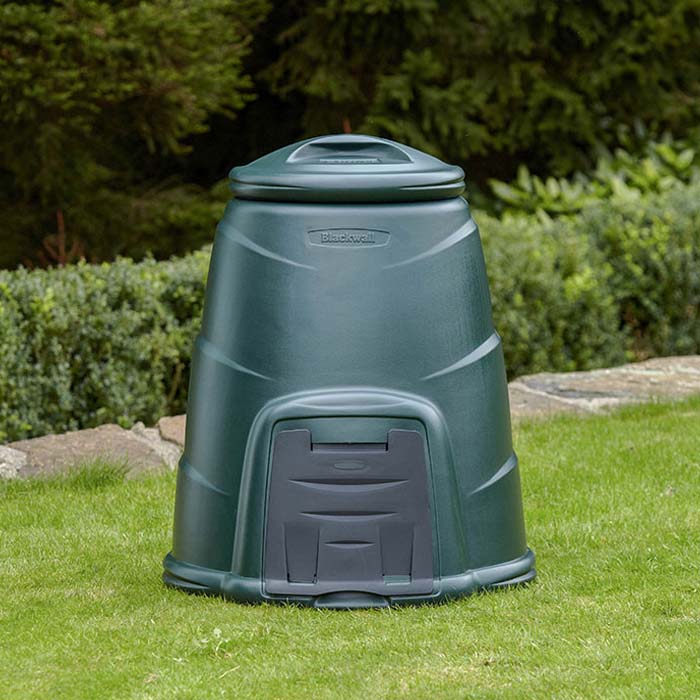

Compost Bin - Description
- Compost Bin With Removable Lid
- Open Bottomed Compost Bin
- Push-Fit Windproof Lid
- Note: This Lid Can Be Stiff to Remove
- Sliding Door Outlet Near Base For Compost Removal
- Material: Recycled Heavy Duty Plastic
- Colour: Green
-
- Height: 88cm (3ft Approx.)
- Diameter (Bottom): 70cm (2.2ft Approx.)
- Diameter (Top): 45cm (1½ft Approx.)
- Outlet Opening: 30x25cm (12x10 Inches Approx)
- Capacity: 220 Litres
- Smooth Inner & Outer Surface For Easy Clean
Delivery - Important Note - Please Read
- We can only deliver orders of this product by Fastway couriers
- Please do not choose DPD as your courier for orders containing this item
Compost Bin - Uses
- This compost bin should be sufficient to handle all the organic waste from a standard house & garden
- It will decompose it so it can be used as fertiliser for soil improvement
Compost Bin - Advantages
- This is an environmentally sound way to handle your house and garden waste
- It saves money on refuse charges
- It saves money by turning a waste product into a valuable organic compost
Compost Bin - What to Compost
To form good compost, it is important to have a good mix of green and brown material
Green Material
- Household: Uncooked fruit, vegetables scraps, eggshells, tea bags & coffee grounds
- Garden: Fresh grass cuttings, plant and hedge clippings, leaves & weeds (not flowering ones)
Brown Material
- Household: Dampened egg boxes, cereal boxes, crumpled single sheets of newspaper
- Garden: Dry leaves, grass & straw
Do not Include
- Glossy magazines, cooked food, meat or diary products
Compost Bin - Advice
- Site the composter on soil or lawn
- If using a concrete base, add a layer of soil 5cm thick to the composter
- You can also add a layer of weed fabric on concrete first, before posiyioning your bin
- Add some woody plant stems at the bottom of the composter to
- Help drainage
- Help air circulation
- It is important to maintain a good mix of green & brown materials
- Keep the lid on to help retain heat
- Compost is produced more quickly in the Summer than in the Winter
- It takes between 6-12 months to produce good quality compost
- It is possible to add an organic activator to aid the process
When is Your Compost Ready?
- The compost should be crumbly, dark & moist
- If it is not quite ready, leave it for another few weeks
- Some material like egg shells might not fully break down but this will not effect the quality of your compost
Note: We don't ship plants on Fridays due to the extended period they would remain without light & water
Shipping Options & Rates
FOR IRELAND & NORTHERN IRELAND
- Standard Courier Delivery With An Post (3-4 Working Days)
- Cost is €4.95 on Orders Below €75
- Free Delivery on Orders Above €75
- Rep. of Ireland & Northern Ireland Only
- Express Courier Delivery With An Post (1-2 Working Days)
- Cost is €5 extra for express delivery
- This service guarantees that any order placed before 4pm will ship from our depot the same day on the next day delivery service *
- Rep. of Ireland & Northern Ireland Only
- Express Delivery With DPD (1-2 Working Days)
- Cost is €11.45 for orders below €75
- Cost is €6.50 for orders above €75
- This service guarantees that any order placed before 4pm will ship from our depot the same day on the next day delivery service *
- Rep. of Ireland & Northern Ireland Only
- This services comes with email tracking
- 'Seed' Postal Delivery Option ***
- Cost is €2 - Packet of Seeds ONLY Orders
- Note: Does Not Apply to Seed Potatoes, Bulbs or Sets ***
- Rep. of Ireland & Northern Ireland Only
- This is a non-trackable service
MAINLAND ENGLAND & SCOTLAND & WALES (Currently Unavailable Due to Brexit)
- Standard International Courier
- Cost is €10
- UK shipping fee covers parcels up to a total weight of 20Kg
WESTERN EUROPE & WORLDWIDE
- Standard International Courier
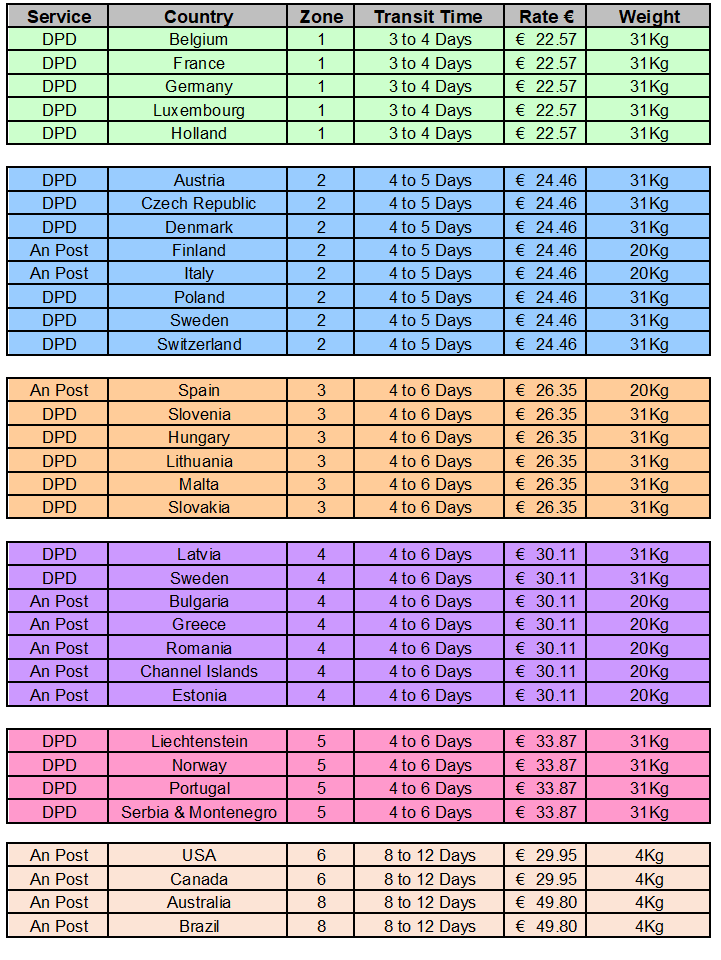
- Delivery rates vary, please see chart below
- Note: There is no free delivery for Western Europe Deliveries
Bulk Bags & Large Item Pallet Deliveries
- Bulk bags & large orders are shipped via pallet couriers on a rigid lorry
- Delivery is to kerbside only
- If road access to your site is tight, then please advise us before purchasing
- Please Note: We cannot guarantee next day delivery on pallet deliveries
- Also, we cannot guarantee delivery on a specific day (Please allow 1-3 days for delivery)
- It's always best to order well in advance to avoid disappointment
- Cancellation of pallets when items are already in transit will incur a 40 euro per pallet cancellation fee (To cover return delivery costs)
- Where pallet delivery can not be made due to site access, a 40 euro per pallet cancellation fee will apply (To cover return delivery costs)
International Delivery Prices & Times
- Please note max weights below, heavier orders may require additional payment
- We will contact you to discuss, if max weight of order exceeded
Terms
- The shipping fee is fixed for an order, regardless of the number of items bought
- All courier orders require signed proof of delivery & the customer must be contactable by phone
- We do not offer a weekend delivery service (Mon-Fri Only excl. Bank Holidays)
- * Our courier achieves a 98% success rate on next day deliveries
- Once your parcel is shipped it will be placed on works courier's next day delivery service
- ** Seed postal option applies to seed ONLY orders & is available in all 32 counties of Ireland
- *** Does not apply to seed potatoes, bulbs or sets


