


Cart is empty

Free Travel Water Bottle With Orders Over €100
Save 24%


Red Stemmed Dogwood - Description
- Bare Root Red Stemmed Dogwood Plants
- Red Stem Dogwood
- Cornus alba 'Sibirica'
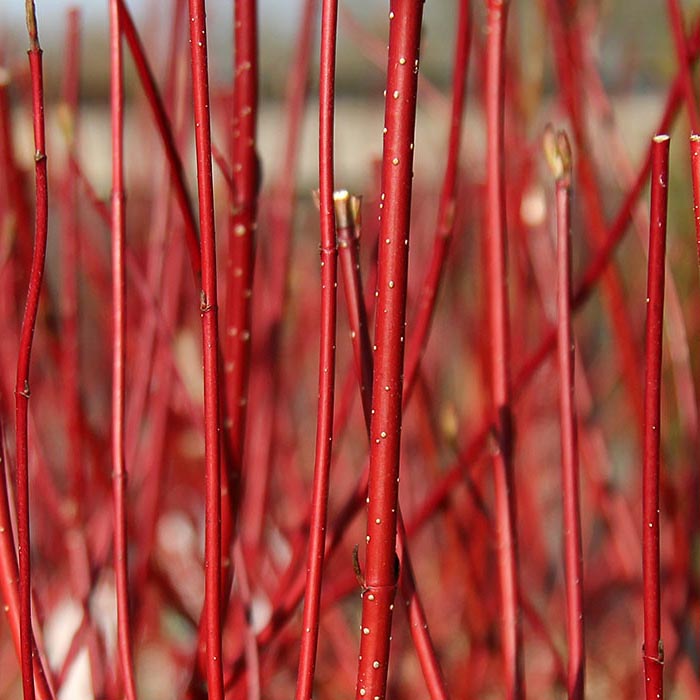
- Deciduous shrub grown for its vivid red winter stems
- Current Plant Size: 2–3ft (80-100cm)
- Plant Type: 0+1 / 1 Year Hardwood Cutting
- Strong Root System
- Quantity: 10 Plants
- Form: Bare Root
- Supplied without a Container or Pot
- Recommended Spacing: 60–90cm Apart
- Can be grown alone for strong impact or mixed with Yellow Stem Dogwood
- Can also be combined with White Stemmed Birch for contrasting winter colour
Red Stemmed Dogwood - Characteristics
- Deciduous shrub valued for its striking red stems during winter
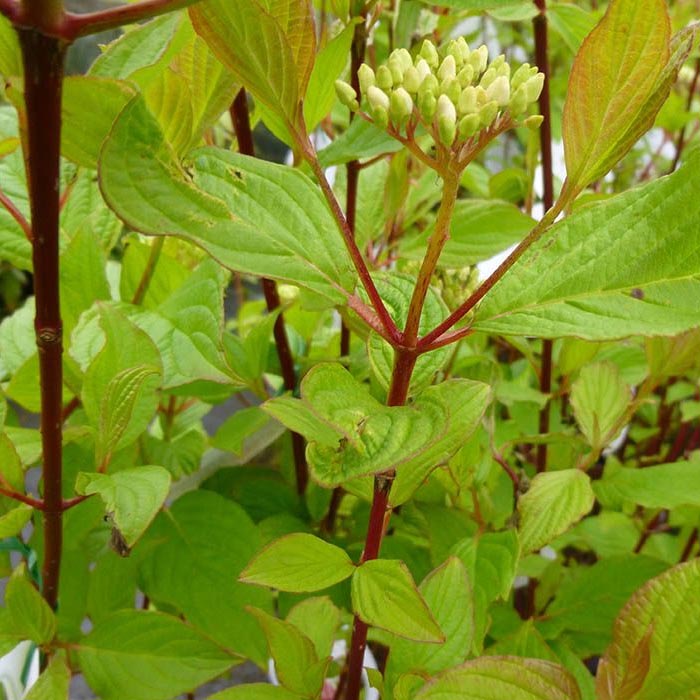
- Green oval-shaped foliage during summer develops attractive red to purple tones in autumn
- Leaves fall in winter, revealing the vibrant young red stems
- Produces clusters of small creamy-white flowers in late spring and early summer
- Moderate to fast growth rate once established
- Very hardy and well suited to cold Irish winters
- Can reach approximately 2.5m tall and spread up to 4m if left unpruned
- Fresh young stems provide the strongest winter colour
- Regular hard pruning encourages vigorous new stems and maintains the best winter display
Red Stemmed Dogwood - Uses
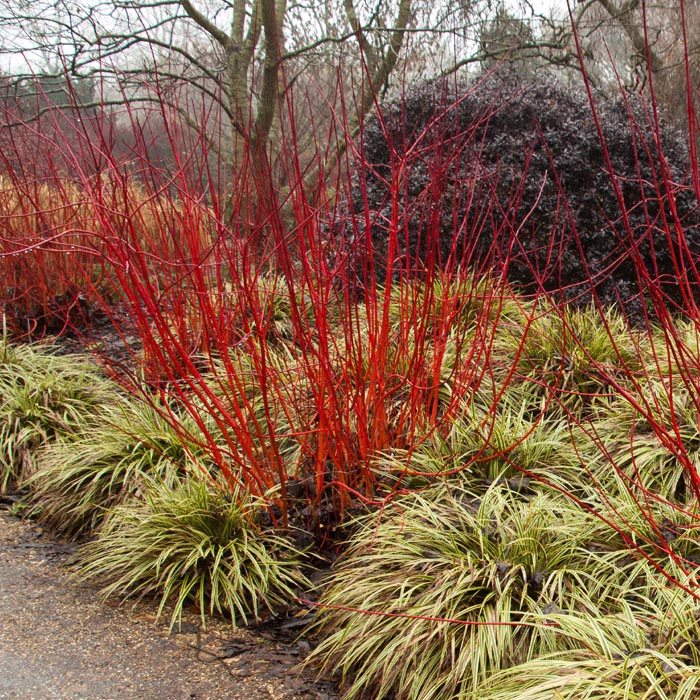
- Excellent for creating strong winter colour in larger gardens and landscapes
- Best planted in groups, blocks or sweeping drifts for maximum visual impact
- Can be planted alone to create a strong mass of red winter stems
- Works particularly well mixed with Yellow Stem Dogwood for contrasting stem colours
- Can be planted beneath White Stemmed Birch for an attractive combination of red and white winter stems
- Suitable for naturalistic planting schemes, large borders and landscape projects
- Can be grown as an individual specimen where sufficient space is available
- Not recommended for very small gardens due to its vigorous and spreading growth
Dogwood Plants - Planting Instructions
Planting Time
- Bare root Dogwood should be planted during the dormant season from October to March.
- Plant as soon as possible after receiving the plants.
- Avoid planting when the ground is frozen or during severe frosty conditions.
Trench Preparation
- For group planting or hedging, prepare a suitable planting trench approximately 30cm wide and 30cm deep.
- Incorporate well-rotted organic matter or farmyard manure into the planting area where appropriate.
- Cover organic matter with a layer of soil before positioning the roots.
- Remove competing perennial weeds before planting.
Positioning Plants
- For hedging or screening, space plants approximately 60–90cm apart.
- Stagger planting positions where a denser screen is required.
- Position each plant at approximately the same depth as it was previously growing.
- Backfill with suitable topsoil and firm the soil carefully around the roots.
- Ensure each plant is upright and level off the soil around the base.
- Water thoroughly after planting.
- Dogwood can be planted in groups or drifts to maximise winter stem colour.
Handling the Plants
- Water the plants thoroughly before and after planting.
- Plant bare root plants as soon as possible after delivery.
- If planting is delayed, temporarily heel the plants into suitable soil.
- Keep the roots protected in their packaging and away from direct sunlight.
- Take care not to damage the roots, bark or buds during handling and planting.
After Care
- Water regularly until the plants are fully established.
- During prolonged dry weather, water approximately every 2 days.
- Keep the planting area free from competing weeds, particularly bindweed.
- Weed regularly during the first growing seasons while the hedge establishes.
- Weed membrane and mulch can be used to suppress weeds and retain soil moisture.
- Avoid strimming or mowing directly around the base of young plants.
Pruning
- Allow plants to establish during their first year before carrying out hard pruning.
- Hard prune established plants every 2–3 years to encourage fresh, brightly coloured stems.
- Prune in February or March before new spring growth begins.
- Cut older stems back to approximately 30cm above ground level.
- Remove a proportion of older stems regularly to prevent the display becoming dominated by dull, mature wood.
- Regular pruning also helps control the plant's spreading habit.
- Where Dogwood is planted in layers, one section can be cut back each year to maintain screening while encouraging new red stems.
Dogwood - Quick Facts
- Sibirica refers to Siberia, reflecting the cultivar's association with this region.
- The youngest new stems provide the brightest red winter colour.
- Regular hard pruning encourages the strongest and most colourful new stems.
- Dogwood wood is exceptionally hard and has historically been used for various practical purposes.
- The winter stems provide valuable structure and colour after the leaves have fallen.
- Excellent companion plants include Yellow Stem Dogwood and White Stemmed Birch.
- Other plants valued for attractive bark include Willow, Paper Bark Birch, Tibetan Cherry, Acer griseum, Arbutus and Betula utilis.


