


Cart is empty

Free Travel Water Bottle With Orders Over €100
Save 23%
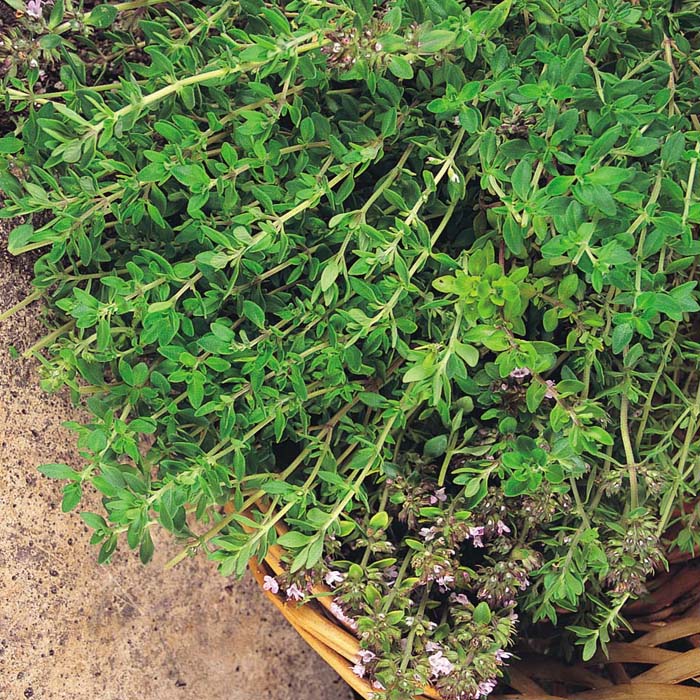

Thyme Herb Seeds - Description
- Thyme Herb Seeds
- Variety: English Winter
- Official Name: Thymus Vulgaris
- AKA Common or English Thyme
- Packet Size: 450 Seeds
- A Low Growing, Wiry Stemmed Perennial
- Produces Small Leaves
Thyme Herb Seeds - Sowing Instructions
- Sow: Spring or Autumn
- Harvest: Can be harvested for fresh use throughout the Summer
- The flavour is best just before flowering
- Keep moist and lightly cover the seed
Thyme Herb Seeds - Uses
- Has both culinary and medicinal uses
- Can be used to preserve meat
- Aids the digestion of fat
- Great for soups, stews or sauces
- Thyme honey is made when bees collect pollen from thyme flowers
- Popular for it's antibacterial and antiseptic purposes
- Can be used as an ointment on skin infections & burns
Thyme Herb Seeds - Advantages
- Very popular among Irish gardeners
- Easy to grow from seed
- Low cost
- Variety of uses
- Great flavour
Index
- Sowing Instructions
- How to Transplant
- Crop Maintenance
- How to Harvest
Sowing Instructions
- Sowing time: Mid Spring
- Sowing location: Broadcast into seed tray or module seed tray
- Use potting compost & perlite mix
- Soak well before sowing
- If using module seed tray, sow five seeds per module or cell
- Requires light to germinate, so do not cover with soil
- Germination after 2 weeks
How to Transplant
- Prick out seedlings once large enough to handle (generally after 8 weeks)
- Transplant seedlings into 9cm pots
- Water before transplanting
- Keep pots indoors & allow develop before transplanting outdoors
- Transplant seedlings out in early to mid summer
- Be sure that frost has passed before planting out
- Young plants will die in the frost
- Harden off before transplanting to outdoors location
- Prefers full sun
- Soil: Good drainage is important
- Moderate to low fertility is fine
Crop Maintenance
- Trim plants back each year after flowering
- Cut stems back to approx 1 inch above old wood each year
- Cut back hard each year to prevent plant from getting leggy
- Feed each spring with a general fertilizer
How to Harvest
- Take only small amounts at harvest
- Don’t cut into old wood
- Can be used as a lawn alternative


