Cart is empty




Cabbage Seeds (Greyhound) - Description
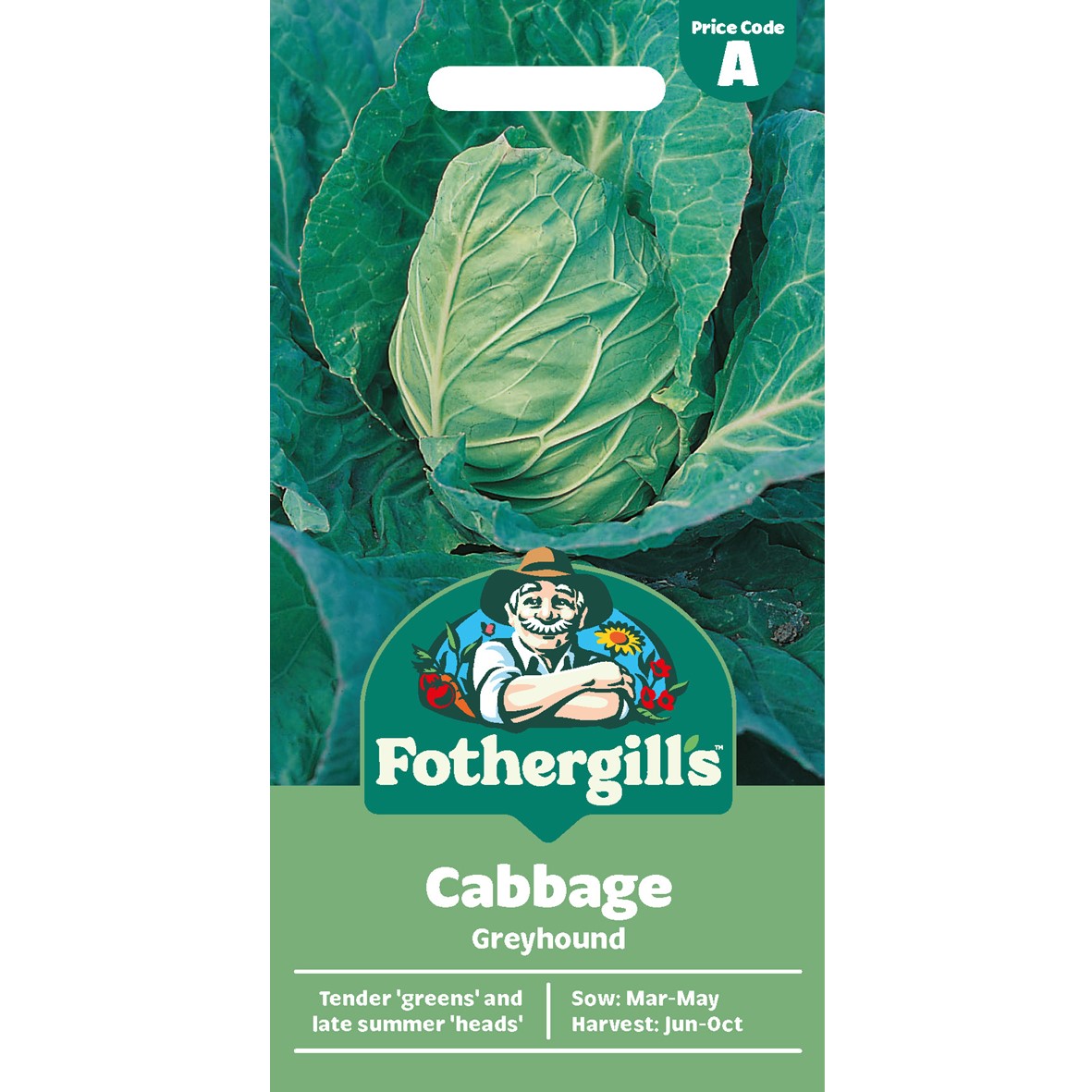
- Pack of Cabbage Seeds
- Variety: Greyhound
- Summer Cabbage
- Packet Size: Approx. 350 Seeds
- Produces Compact Pointed Heads
- Dark Green Leaves
- Harvest June to October
- Suited to Successional Sowing
Cabbage Seeds (Greyhound) - Sowing Instructions
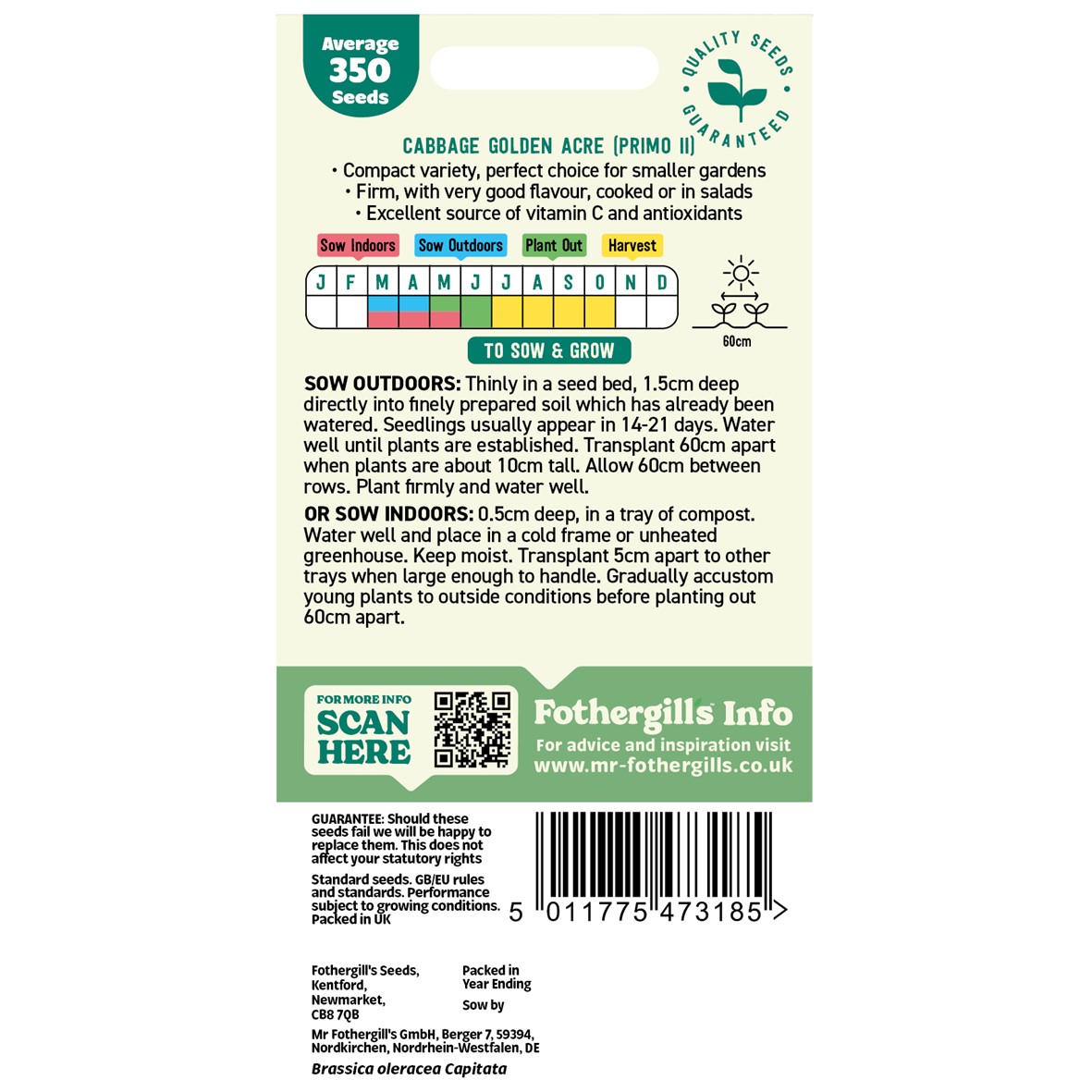
- Sow:
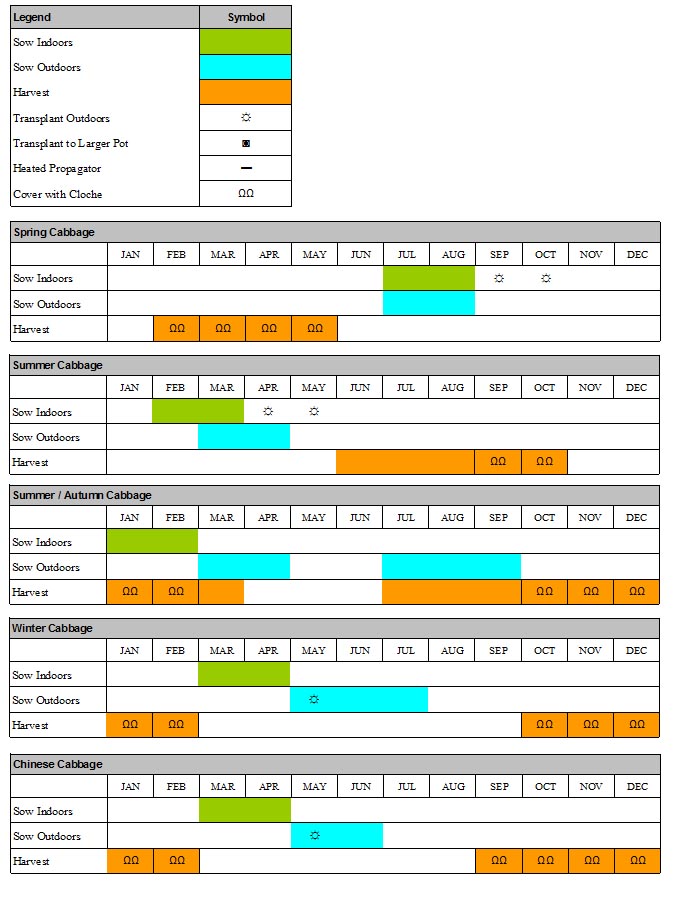
- Indoors: March to may
- Outdoors: March to April
- Plant Outdoors: May to June
- Harvest: July to October
- Protect early sown seedlings using garden cloche
- Prefers a fertile, well drained soil
- See Images or 'How to grow' tab for full growing instructions
Cabbage Seeds (Greyhound) - Uses
- Cabbage can be used in a variety of cooking dishes
- Suitable for plant sales
Cabbage Seeds (Greyhound) - Advantages
- Frost hardy annual summer vegetable
- High in Vitamin B & C
- Compact heads with excellent flavour and little wastage
- Low cost
- Easy to grow
Cabbage Seeds (Greyhound) - Notes
- Caterpillars, birds and other pests can be a problem
- To protect against clubroot, use garden lime
Index
- Sowing Instructions
- How to Prick Out
- How to Transplant
- Crop Maintenance
- How to Harvest
- Storage
- Pests & Diseases
Sowing Instructions
- Autumn & summer cabbages are sown in mid spring
- Sow undercover in February in plug trays
- Can be sown directly outdoors from March to July
- Fill plug tray with compost, soak compost
- Place two seeds per plug
- Germination take roughly 2 weeks
- Keep in a warm location (min 10°C)
- Thin or prick out to one seed per plug once seedlings emerge
How to Prick Out
- Pricking out is a process of thining out & transplanting young seedlings
- This can be done as soon as seedlings are large enough to handle
- Water before pricking out
- Using a dibber or pen to lift the young seedlings from the soil
- Hold the seedlings leaves - never hold by the stem
- Once seedling is free of the soil, replant it in it's own new plug
- Ensure the seedling's root is planted deep into the plug tray
- Firm in seedlings well
How to Transplant
- Transplant seedlings once they are roughly 7cm in height
- Prepare soil prior to transplanting & soak well
- Space plants 40cm apart
- When planting, be sure to plant deep enough
- Avoid soil that can become waterlogged or has dried out completely
- Cabbages prefer fertile, heavy clay soils
- Dig over soil in the previous season, adding well rotted organic matter
- Dig to a depth of 1 1/2 ft, removing any stones and perennial weed roots
- Rake and level soil
Crop Maintenance
- Earth up if top heavy
- Feed with nitrogen based feed during season
- Weed well until established
- Keep young plants well watered until established
- Cover crops to protect against pigeons
Harvesting
- Cabbage should mature within a few months
- Water well the week before harvest
- Harvest Summer cabbages from June to October
- You can remove outer leaves as you need them
- Or harvest the entire cabbage by cutting the head at ground level
- Leave roots in the soil as they can sometimes re-grow
Storage
- Will keep in the fridge for short term storage
- For longer term, store in a cool dark area for 3 to 4 months
Pests & Diseases
- Important to protect against birds, especially pigeons
- Bird protection in the form of netting is best
- Slugs are a major problem - barriers such as eggshells, coarse sand, ash & copper can control problem
- Caterpillars also a problem, set up netting early to keep butterflies off your crops
- The fungal disease clubroot is a serious ailment of cabbage
- Effects on cabbage: Yellow wilting leaves and stunts growth
- Other pests and diseases include black rot, cabbage root fly and frost
- Important to rotate crops every year