


Cart is empty

Free Travel Water Bottle With Orders Over €100
Save 17%
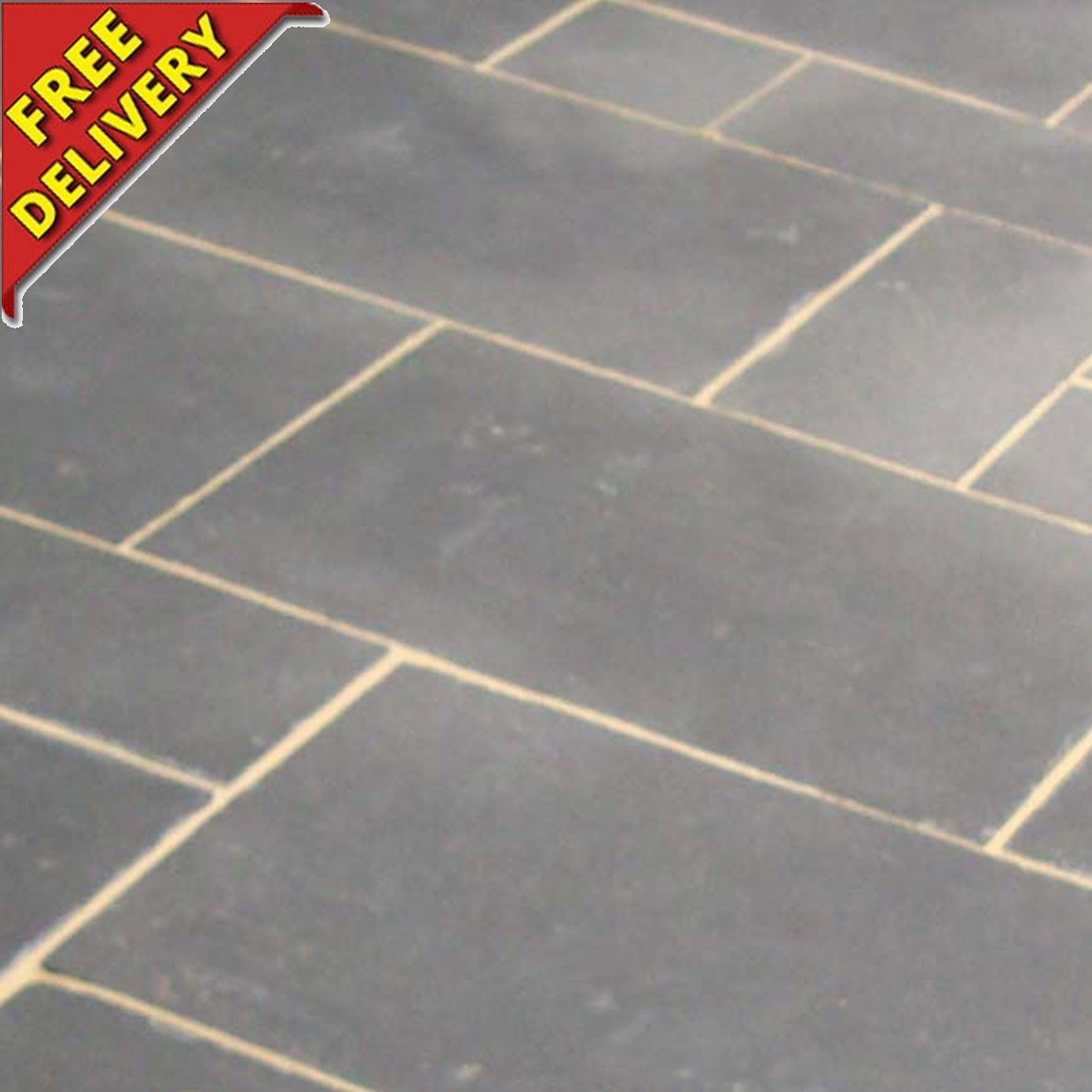
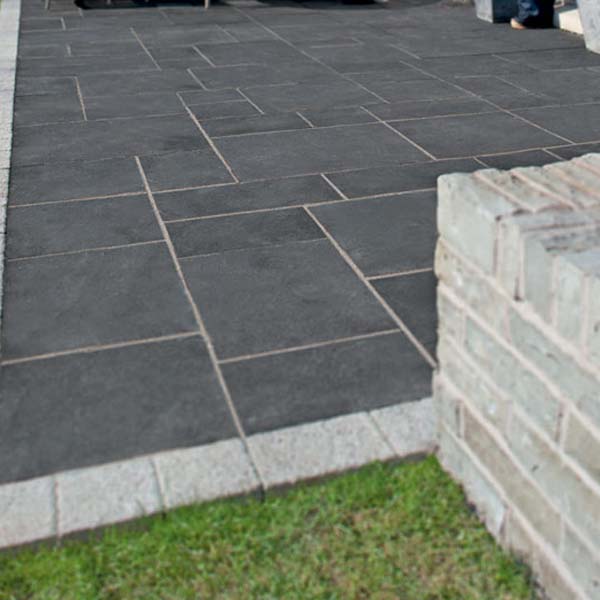
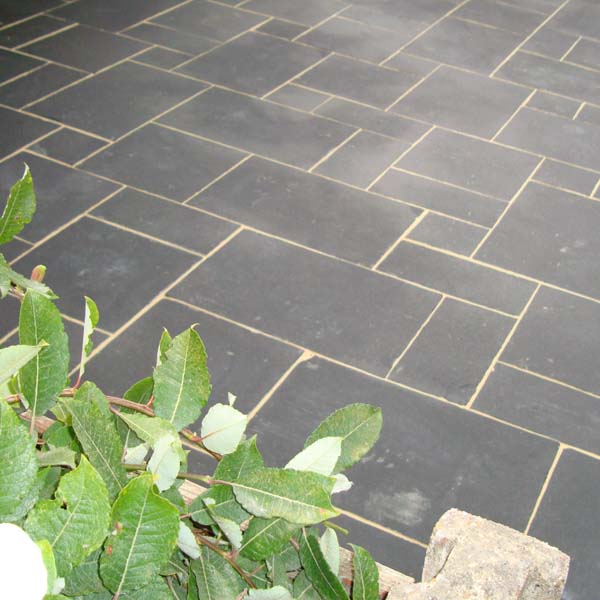



Black Indian Limestone Paving - Description
- Top Quality Limestone Paving
- Colour: Black
- Colour Tones: Greys, Charcoal & Black
- Mixed Pallet of 4 Sizes
- 300 x 300mm
- 300 x 600mm
- 600 x 600mm
- 600 x 900mm
- Total Area: 15m2
- Depth of Flagstones: 25 - 35mm
- Finish: Natural Riven Surface
- NOTE: This is 15m2 of Paving NOT 150m2 of Paving
- IMPORTANT: This Product is dispatched from Dublin so it costs a little more to deliver to the rest of Ireland
- Please choose whether you live in Dublin or the rest of the country in the delivery options above
Black Indian Limestone Paving - Delivery - Please Read!
- Free Delivery Within on the Island of Ireland
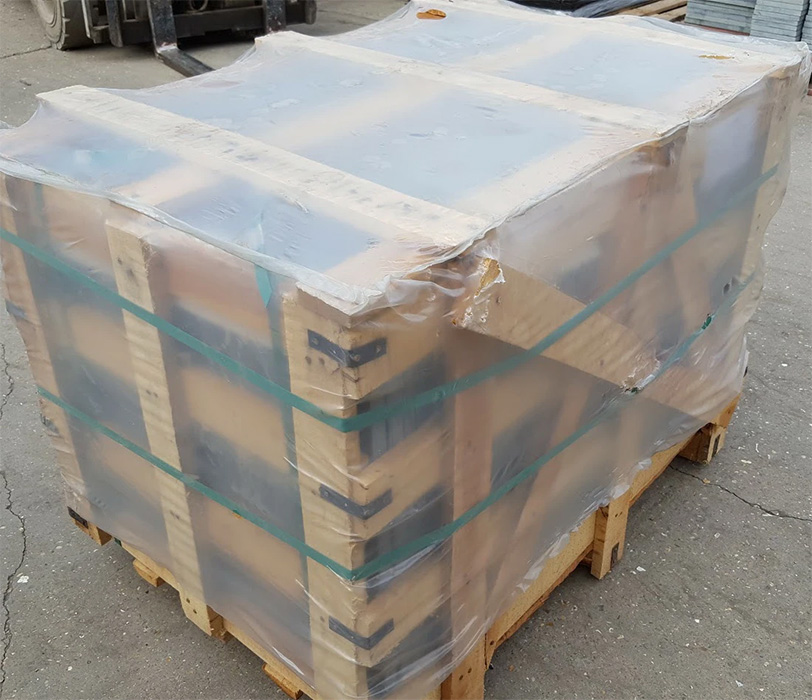
- Bulk bags & large orders are shipped via pallet couriers on a rigid lorry
- Delivery is to kerbside only (see DOWNLOAD tab)
- If road access to your site is tight, then please advise us before purchasing
- Please Note: We cannot guarantee next day delivery on pallet deliveries
- Also, we cannot guarantee delivery on a specific day (Please allow 1-3 days for delivery)
- It's always best to order well in advance to avoid disappointment
- Cancellation of pallets when items are already in transit will incur a 40 euro per pallet cancellation fee (To cover return delivery costs)
- Where pallet delivery can not be made due to site access, a 40 euro per pallet cancellation fee will apply (To cover return delivery costs)
- Re-rooting of a pallet where incorrect delivery address details have been given, a 40 euro per pallet cancellation fee will apply (To cover return delivery costs)
- Return of pallets when items are already delivered will incur a 60 euro per pallet cancellation fee (To cover return delivery costs)
Black Indian Limestone Paving - Uses
- Stylish & modern looking paving
- Ideal for patios & paths in contemporary schemes
- Suited for laying in both an alternating or random pattern
- Works great with granite setts, rendered walling or other modern materials
Black Indian Limestone Paving - Advantages
- Very weather resistant & frost resistant
- Suited to both internal & external applications
- High thermal properties
- Resistant to frost & air pollution
The first step in the construction & laying of a patio is the preparation of the base or foundation. For a patio that will stand the test of time, a solid foundation is required. The depth & construction of your foundation will depend on the type of flag used & the end purpose for the patio. Taking the time to get the foundation right is essential & will ensure that the rest of the process goes smoothly.
3 determining factors for your foundation
- Use or traffic. If the patio will be driven over, then a deeper sub base & foundation will be required. A sub base greater than 100mm is required
- Material. If you are using natural stone, it is recommend to lay the flags on a wet concrete mix
- Calibrated stone. If you are using man-made stone or calibrated natural stone then you can lay your patio on a screeded bed of sand
Total depth of the foundation that you need to excavate = width of paving + Bedding Layer + sub base. Area excavated should be slightly larger than area to be paved
Types of foundation
Sub bases for patios that will be driven on
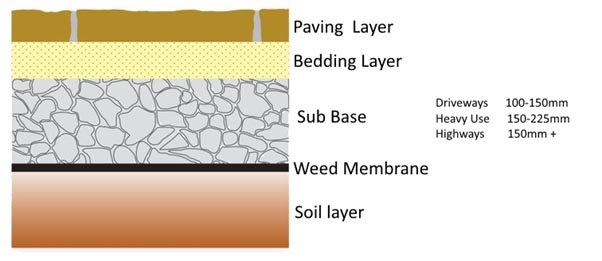
Sub bases for patios are using un-calibrated natural stone
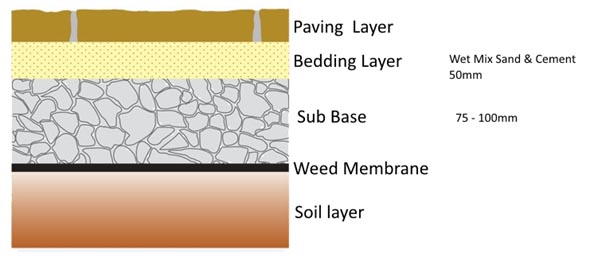
Sub bases for Patios are using calibrated natural stone or man-made paving
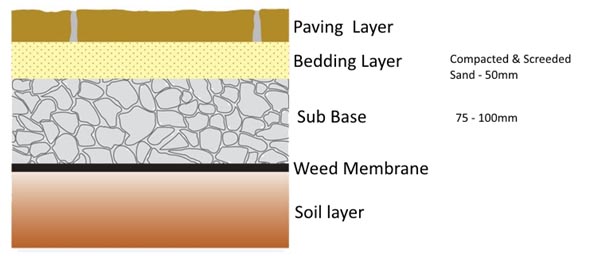
Materials to use in the preparation of your foundation
Sub Base
804, hardcore, crusher run/ crusher stone or crushed stone should be used for the sub base. The general rule of thumb is that the depth of this layer should be at least twice the depth of the largest particle size. This layer needs to be compacted after spreading, see above for ideal depths.
Coverage: 1 tonne of 804 covers approx 10 m² @ 75mm compacted thickness
Dry Mix Bedding Layer
Also known as the screed or sand layer, this is the layer that the paving flags are laid directly on to, the bedding layer needs to give you a level surface & allow for good drainage.
For calibrated paving you can use grit sand (3mm), sharp sand (3mm) or horticultural sand (5mm)
This bedding layer is compacted and screeded to achieve a flat bed on which you are laying your flags. The depth & level of the screed bed is achieved using screed rails & a screeding board.
A screeded bed is typically established approximately 5-10mm high, and the paving then compacted down to the required level.
Coverage: 1 tonne of 3mm Grit Sand covers approx 10 m² @ 50mm compacted thickness
Wet Mix Bedding Layer
For natural stone, use wet mix concrete, also called mortar. The most commonly used mix for concrete is 6 parts grit sand, 1 part cement. Add water slowly to achieve the right consistency. The aim is to achieve a ‘slump’ that is the same consistency as a bricklaying mortar or ‘whipped cream’. The ratio of each will determine the strength of the mortar. For best results and on large paving jobs you will need a cement mixer.
Coverage: 1 tonne of wet cement will cover approx. 9 m²
Laying flags
Paving flags need to be handled with care and should be lowered carefully into position. Lower the flag onto the screed bed and into position then tap down on the flag on all four corners, compacting down the flag. Asses each flag for height & ensure that they are sitting flat & not ‘rocking’.
To avoid disturbance of sand layer avoid excessive walking on sand. Continue to use string line and spirit level to maintain ‘level’ flags. Note: all paving should slope away from buildings.
After laying flags
Once all the flags are in place a haunching should be installed to the edge of the patio. Haunching prevents flags from being 'pushed' out of alignment by the weight placed on pavement. You can use the same bedding mix concrete to construct haunchings. As a rule of thumb the haunching concrete should be at least the width of the edging it is supporting.
Compact and smooth the haunching concrete with the back of a trowel or spade.
Lastly, point up between paving flags using mortar mix taking care not to get mortar on new paving flags. Sharp Sand is used instead of mortar on block paving.


