


Cart is empty

Free Travel Water Bottle With Orders Over €100
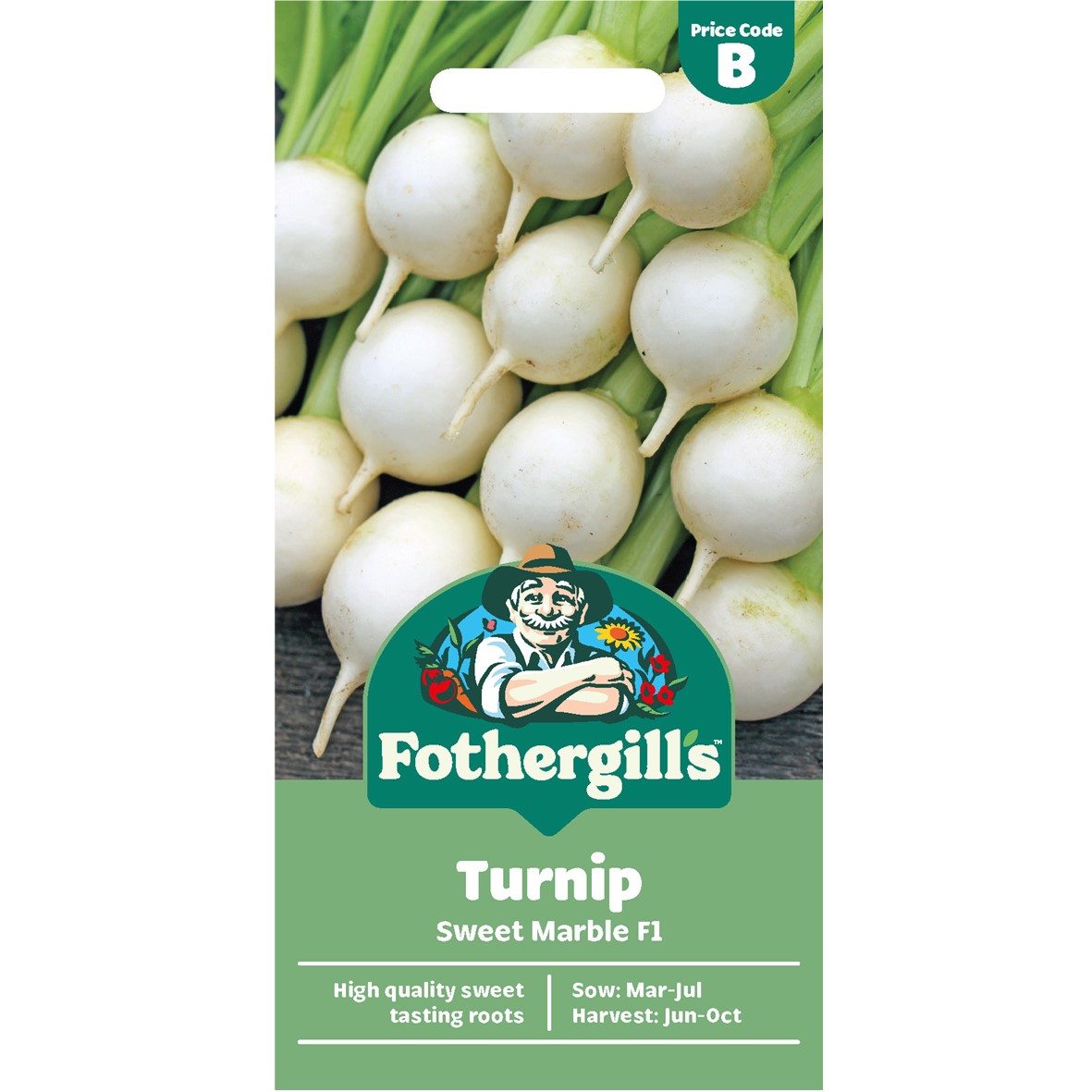
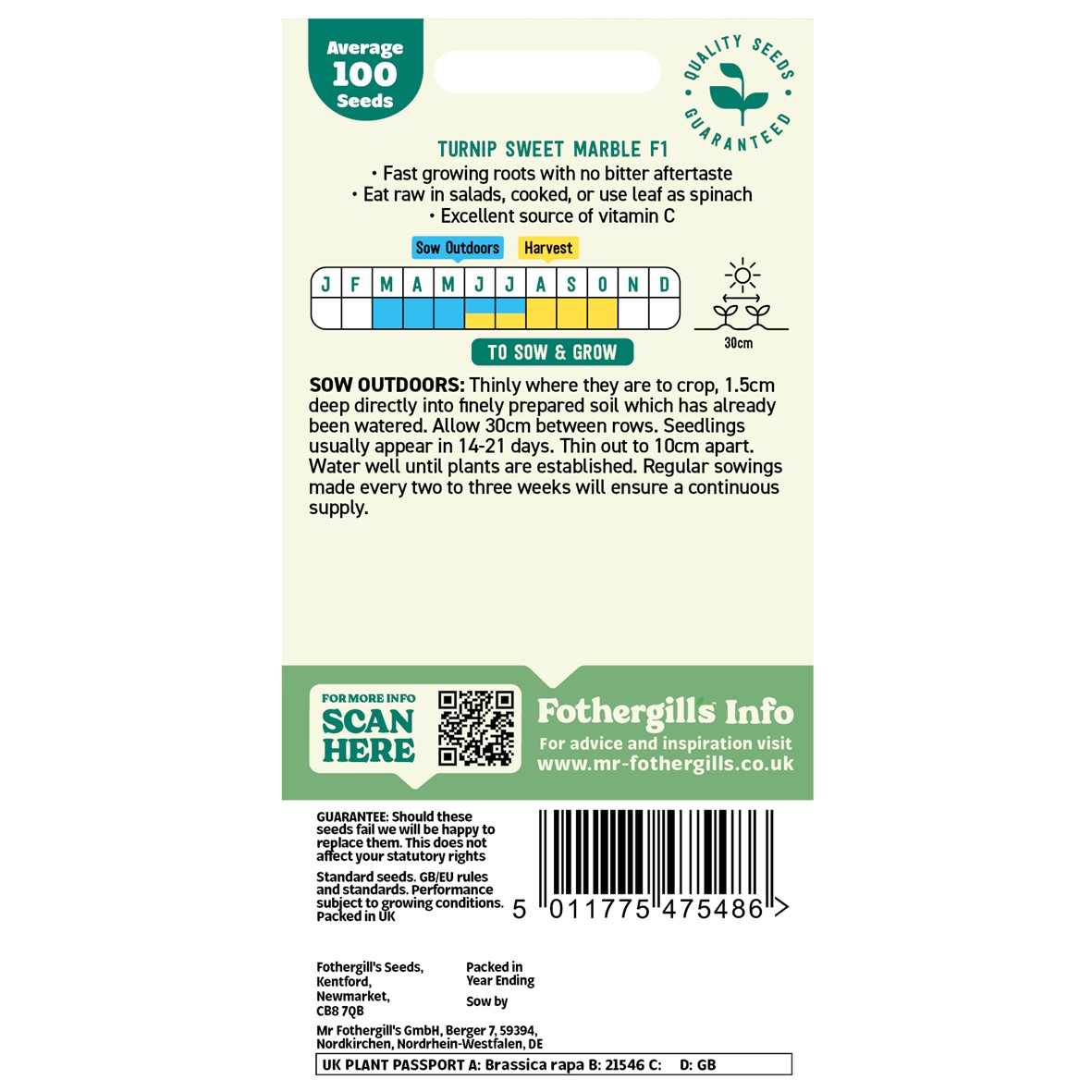



Turnip Seeds - Description
- Pack of Turnip Seeds
- Variety: Sweet Marble Hybrid
- Packet Size: Approx. 100 Seeds
- Early Maturing Variety
- Pure White Globe Shaped Roots
- Produces a Solid Flesh with Sweet, Juicy & Mild Flavour
- Can be Eaten Raw in Salads
- Popular Choice for Spring Sowing
Turnip Seeds - Sowing Instructions
- Sow: March to July
- Harvest: June to October
- Water a little and often in dry weather
- Start thinning as soon as possible
- See how to grow tab for full growing instructions
Turnip Seeds - Uses
- Marketed during summer as a mini veg
- Or later as a full grown veg
- An excellent side dish
- Lovely grated raw into a salad
- High in Fibre
Turnip Seeds - Advantages
- A popular first class globe variety
- Fast growing
- Easy to grow
- Sweet and full of flavour
- A trouble free crop
How to Sow Turnips
How to Thin Out Turnip Seedlings
- Remember to water in dry weather, keeping moist
- Turnips are not as hardy as swedes
- They prefer a sheltered site, in partial shade
- Soil should be deep & fertile with plenty of farmyard manure
- Soil ph of between 5.5 and 7.5 is fine
- Spread well rotted compost or manure on the soil the previous Autumn
- A week before planting, lightly rake soil adding some growmore or fish, blood and bone
- Keep the soil weed free, use a garden hoe to clear emerging weeds every two weeks
- Keep soil moist, as drying out and re-wetting can lead to roots splitting
When to Harvest Turnip Crops
- White turnips such as 'snowball' is ready for Harvest after 5-6 weeks
- Harvest roots when they have reached 7-10cm in diameter
- Harvest before they get too big to maintain good flavour
- Alternatively, turnips can be harvested for their greens, this can be done once they reach 10cm, cut foliage and allow it to re-sprout
- Begin lifting roots when they are roughly the same size as a large orange
- Turnips can tolerate some frost
- Turnips will actually sweeten when left in frosty ground
- Recommend to wait till after frost to harvest
Storage of Turnips
- Turnips will keep for 4-5 months if kept in a cold dark area, away from strong flavours or scents
- To freeze, simply peel, dice and blanch
- Remove and dry and place in plastic bags in freezer
Pests & Diseases that Affect Turnips
- Turnips suffer from the same issues as cabbage
- Slugs can eat foliage preventing root establishment
- There are many slug control options from dried egg shells to copper tape
- The fungus clubroot which is a common disease of brassicas can also infect turnip
- Signs of clubroot include distorted, wilting leaves and misshapen and swollen roots
- Pigeons can also eat turnip foliage


